

The short answer
For a first try, buy a ready-to-fruit block of an easy oyster variety and grow it somewhere out of direct sun where you can keep it humid. If you want fresh mushrooms every week without building your day around them, you need something that holds the humidity, temperature and fresh air for you. That means a grow tent you tune yourself, or a cabinet like Flush.
What gourmet mushrooms need
Every method in this guide is a different way of providing the same few things. A mushroom block fruits when it gets:
- High humidity. Most gourmet varieties fruit at somewhere between 85% and 95% relative humidity, according to the published growing ranges for the blocks we sell.
- The right temperature. Many oyster varieties like it fairly cool: snow white oyster does best at 15–17°C. Others are happy much warmer. Pink and golden oyster fruit at up to 30°C.
- Fresh air. Mushrooms breathe out carbon dioxide. If it builds up around them, they grow long and thin instead of thick and meaty.
- Some light, but not sun. Mushrooms grow toward light, but direct sun dries a block out fast.
You can see the pattern in Flush's own presets. The Pink Oyster preset holds 24°C, while the Snow White Oyster preset holds 16°C.
The Australian problem: heat and dry air
Those conditions are a long way from a typical Australian living room. Indoor air is usually far drier than mushrooms want, especially with air conditioning or heating running, and a summer afternoon in much of the country pushes a room well past what the cool-loving varieties like.
That is why a block on the kitchen bench needs frequent misting, and why one hot weekend away can leave you with a dried-out block. It happened to us. Before we built Flush, our grow kits kept drying out, and our grow tent needed ducted air conditioning to get through summer.
You can work with the climate or control it.
- Grow with the seasons. Save cool-loving varieties such as blue oyster and snow white oyster for the cooler months, and grow warm-tolerant varieties in summer.
- Control the climate. A grow tent with a humidifier, or a cabinet like Flush that heats, cools and humidifies, takes the season out of it.
| Variety | Fruiting temperature | Time to harvest |
|---|---|---|
| Pink oyster | 18–30°C (best 18–24°C) | 5–7 days |
| Golden oyster | 18–30°C (best 18–24°C) | 7–14 days |
| Phoenix oyster | 18–27°C (best 18–24°C) | 5–7 days |
| Warm white oyster | 10–30°C (best 18–24°C) | 5–7 days |
Option 1: a grow kit on the bench
A grow kit is a bag of substrate that mushroom mycelium has already grown all the way through. You cut the bag open with a clean, alcohol-wiped blade, keep it humid, and mushrooms push out of the cut.
Good for: a cheap first try, growing with kids, and finding out which varieties you like.
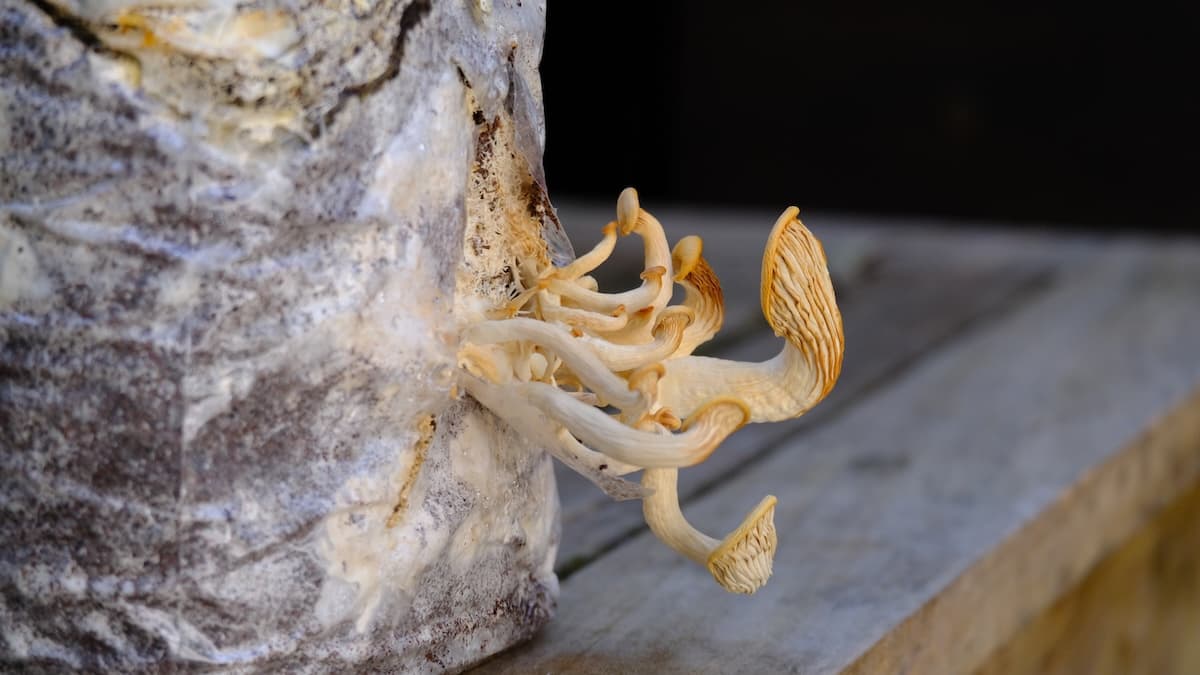
The catch: you are the climate control. Most kits rely on a spray bottle, and you need to mist every day. Outside a controlled environment, results vary a lot with the room and the season.
Flush Blocks are ready-to-fruit blocks, and you can grow one this way. It is harder than growing it in Flush, but it works. See mushroom grow kits for the varieties.
Option 2: a bucket of straw
The bucket method is the classic low-cost DIY approach, most often used for oyster mushrooms. You pasteurise chopped straw in hot water, mix it with grain spawn (mushroom mycelium grown on grain), pack it into a bucket with holes drilled in the sides, and wait. Once the mycelium has grown through the straw, mushrooms fruit out of the holes.
Good for: people who enjoy the process and want to experiment cheaply.
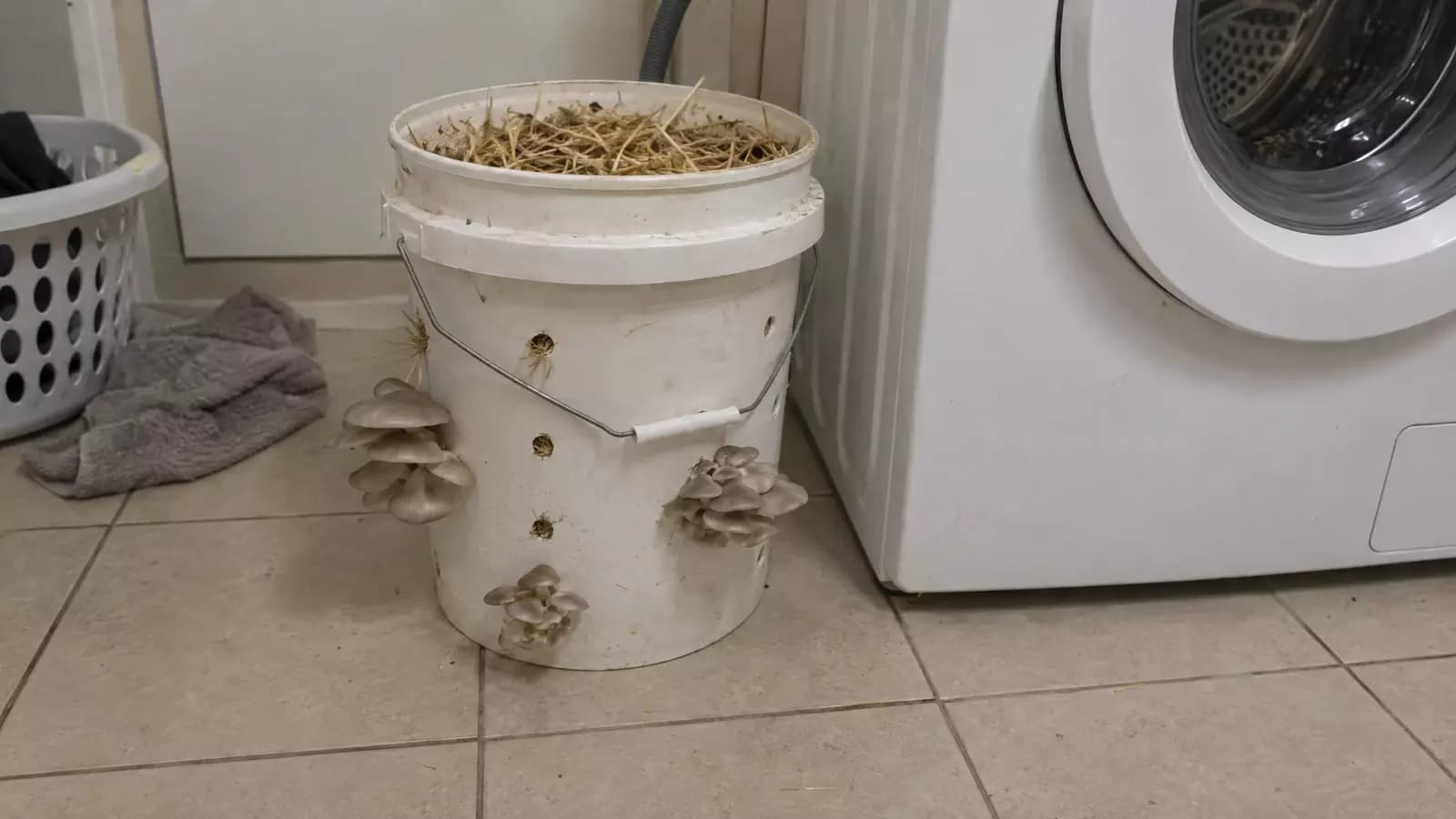
The catch: it takes longer than starting from a ready block, because you are doing the colonising yourself, and mould can take over if the straw is not pasteurised well. Once it starts fruiting you still need to keep the bucket humid.
Option 3: a grow tent or fruiting chamber
A mushroom grow tent is usually a set of shelves inside a clear plastic cover, often called a Martha tent, with a humidifier, a fan for fresh air and sometimes a controller. A fruiting chamber is the same idea in a different box: a plastic tub, a converted cabinet or an old fridge, set up to hold humidity around your blocks.
Good for: growing lots of blocks at once, and people who like tinkering.
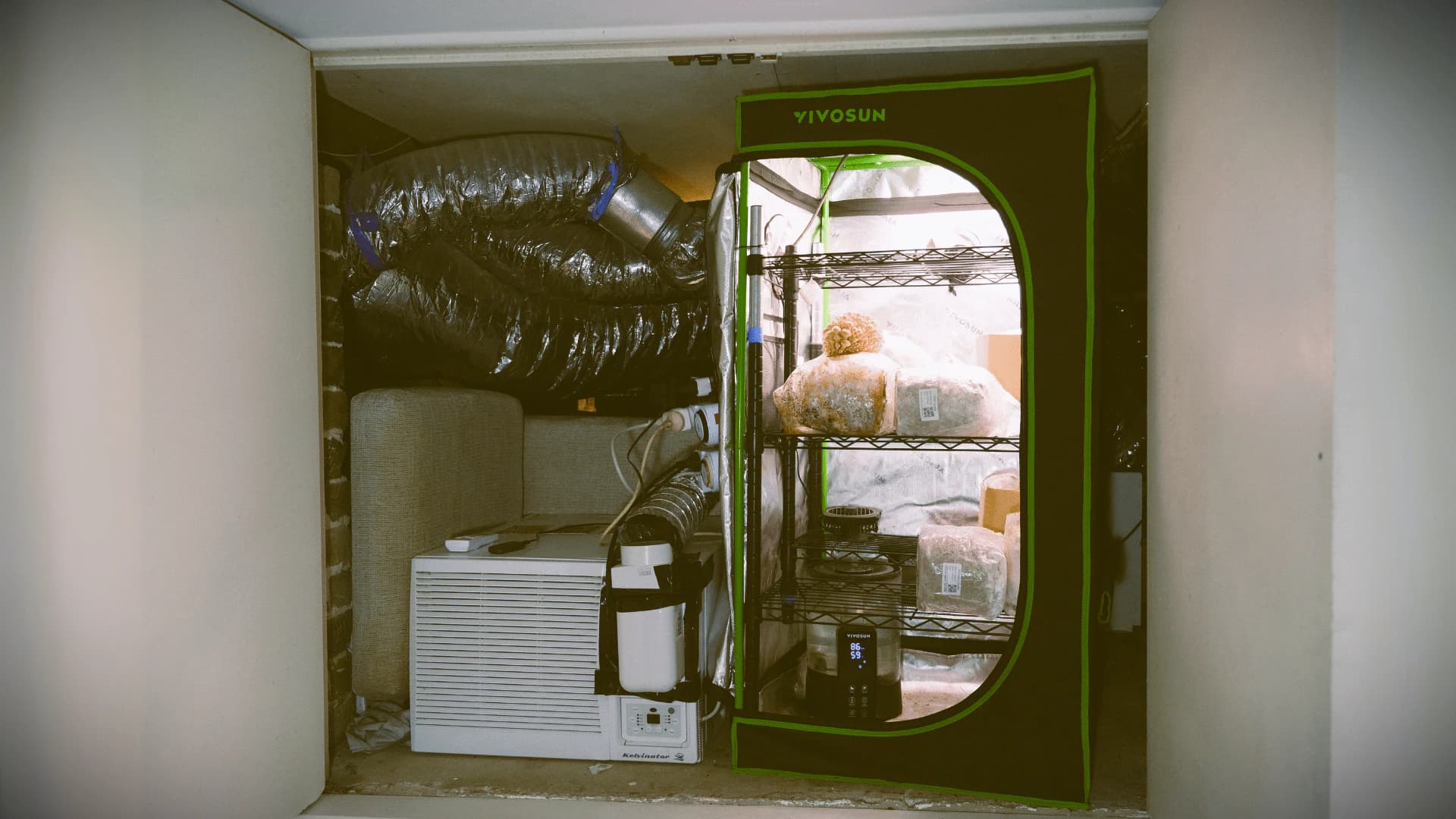
The catch: you choose, buy and connect the parts yourself, and it takes some trial and error to keep conditions steady. Most tents do not cool, so summer heat is still your problem, and the gear is bulky enough that it usually ends up out of sight. Ours stayed hidden in a cupboard.
We compare tents, chambers and Flush side by side in Mushroom grow tent vs fruiting chamber vs Flush.
Option 4: an automated cabinet like Flush
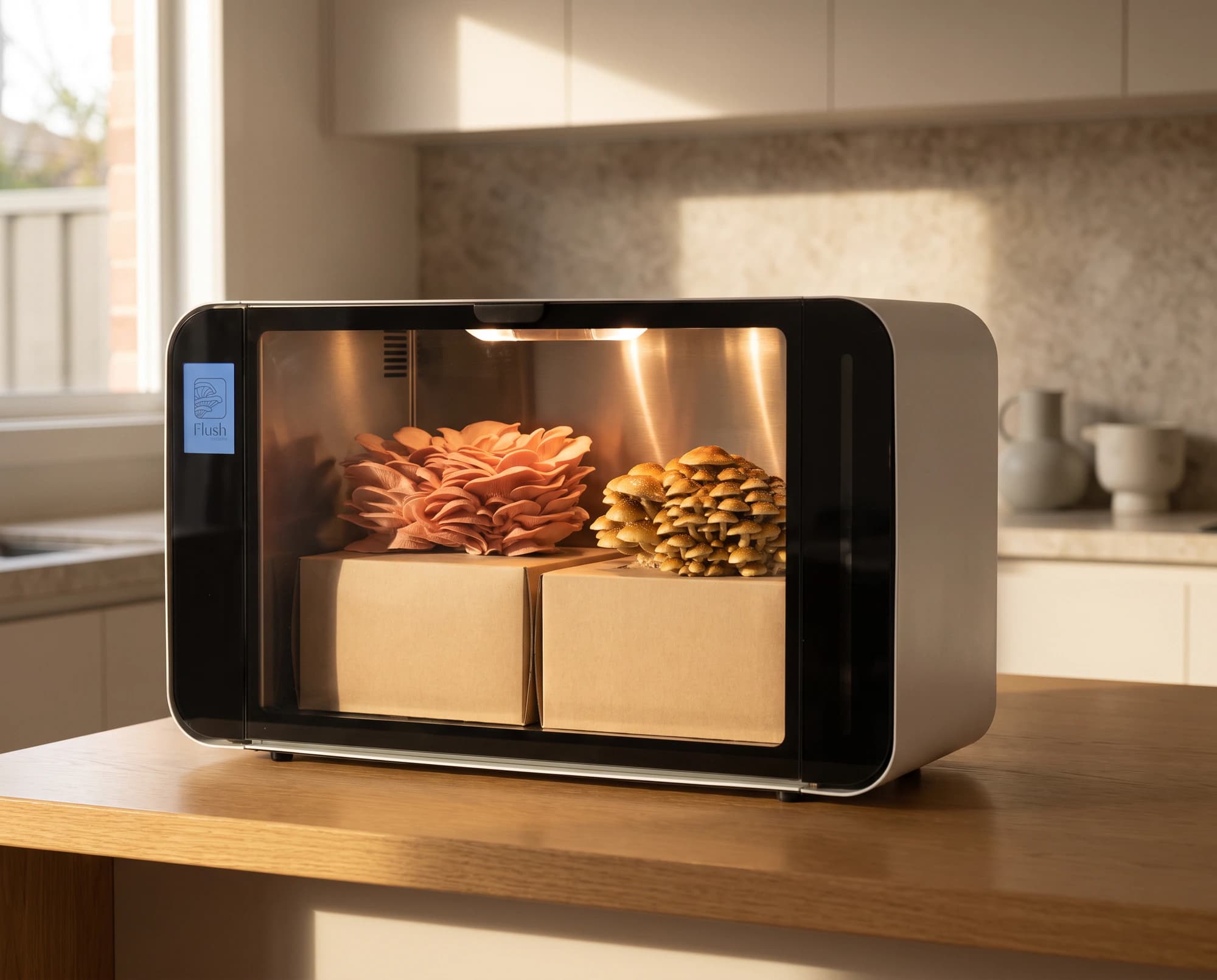
Flush is a countertop mushroom grower that automatically controls temperature, humidity and fresh air. It is 64 cm wide, 37 cm high and 22 cm deep, holds one or two blocks, and has presets for popular varieties, plus an Advanced mode for setting your own targets.
You place a block inside, choose its preset on the touchscreen and close the door. The only regular job is topping up the water reservoir, and a full reservoir lasts at least a week. With two blocks on the go, Flush can grow up to around 1 kg of mushrooms a week, depending on the variety. Setting it up takes about five minutes (set-up guide).
Good for: a steady supply of gourmet mushrooms without a daily routine, apartments, and anyone whose grows keep drying out or overheating.
The catch: it costs more upfront than a kit or a DIY tent (see the current price on the Flush Cabinet page), it holds two blocks rather than a shelf full, and you still buy a block for each grow.
Which option suits you?
| If you want | Try |
|---|---|
| A cheap first try | A grow kit of an easy oyster variety |
| To learn the whole process | The bucket method |
| Lots of mushrooms, and you enjoy tinkering | A grow tent or fruiting chamber |
| Fresh mushrooms every week with almost no routine | Flush |
| To grow in a small apartment | A grow kit on the bench, or Flush |
Still deciding? Our two-minute quiz looks at your kitchen, routine and appetite, and tells you whether Flush is likely to suit you.
Which varieties are easiest?
These ready-to-fruit blocks are rated as beginner varieties: snow white oyster, blue oyster, golden oyster, phoenix oyster and lion's mane.
Those ratings describe growing without a cabinet, where you are judging the misting and the fresh air yourself. In Flush the cabinet makes those calls, which is why our product pages do not show a difficulty rating. If lion's mane is on your list, start with How to grow lion's mane at home.
How long does it take?
From a ready-to-fruit block, oyster mushrooms are usually ready to pick in about a week. Lion's mane takes around two weeks, and slower varieties such as chestnut and maitake take two to three. Most blocks then fruit again. The first flush is usually the biggest, and a block typically gives two or three harvests.
How to harvest
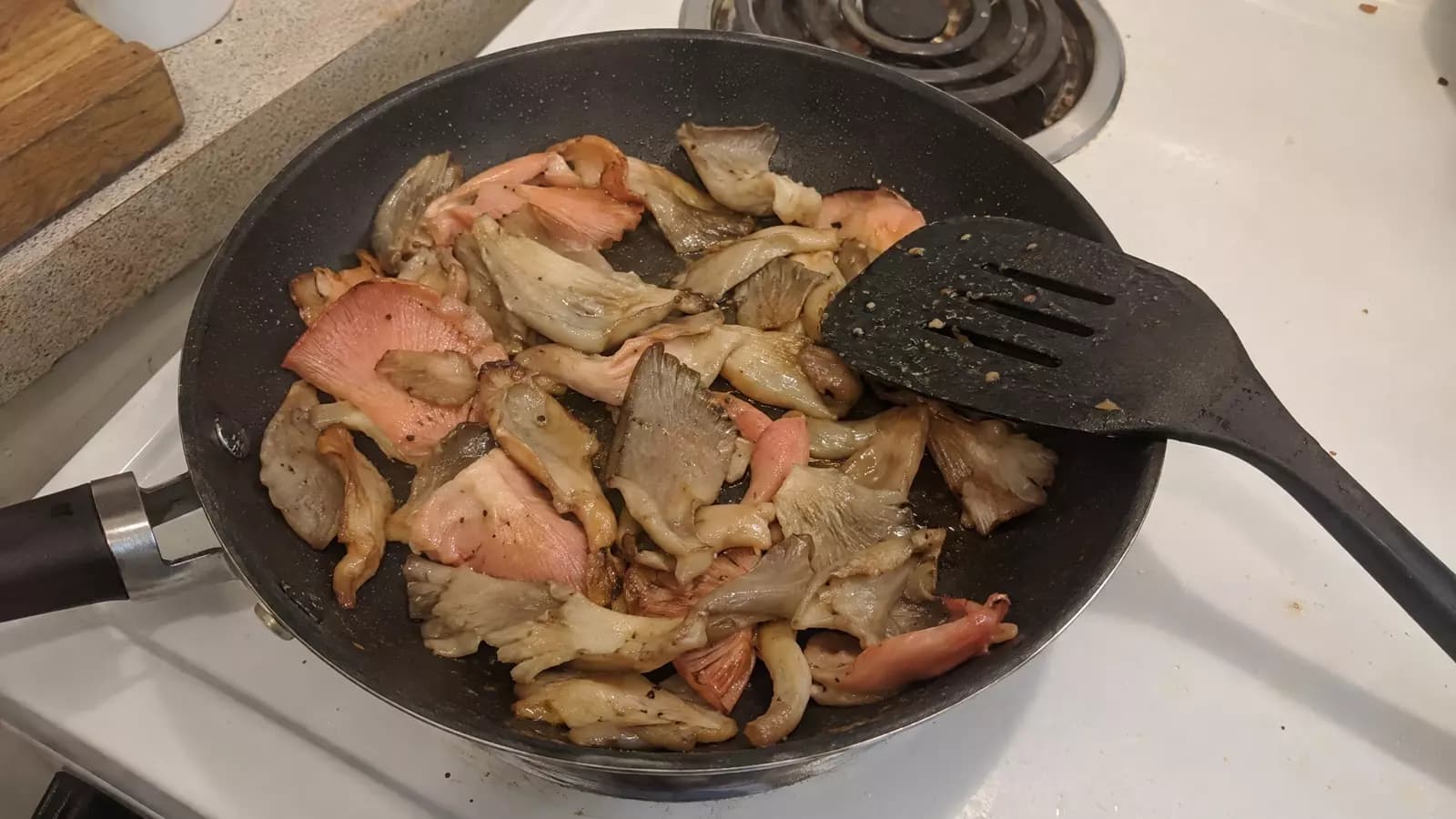
For oysters and most capped varieties, pick when the caps are fully formed, before their edges start to turn upwards. Twist the cluster off at the base or cut it with a clean knife.
Common questions
Is it legal to grow mushrooms at home in Australia?
Yes, for edible gourmet varieties. Oyster, shiitake, lion's mane and the other varieties in this guide are ordinary food mushrooms. Mushrooms that contain psilocybin are controlled drugs and a different matter entirely. Grolia sells and supports gourmet varieties only.
How long does it take to grow mushrooms at home?
From a ready-to-fruit block, oyster mushrooms are usually ready in about a week and lion's mane in about two. Starting from spawn adds weeks, because the mycelium has to grow through the substrate first.
Which mushrooms are easiest to grow for beginners?
Oyster mushrooms. Snow white, blue, golden and phoenix oyster blocks are rated as beginner varieties, along with lion's mane. See the Flush Blocks for each one.
Can I grow mushrooms in an apartment?
Yes. A grow kit and Flush both fit on a kitchen bench, so you do not need a garden or a garage. Keep kits out of direct sun and away from heaters and air-conditioning vents, which dry them out.
Do mushrooms need sunlight to grow?
No. Mushrooms do not need sunlight, but they grow toward light, so a bright spot out of direct sun works well. Flush has its own soft light on a day and night cycle.