

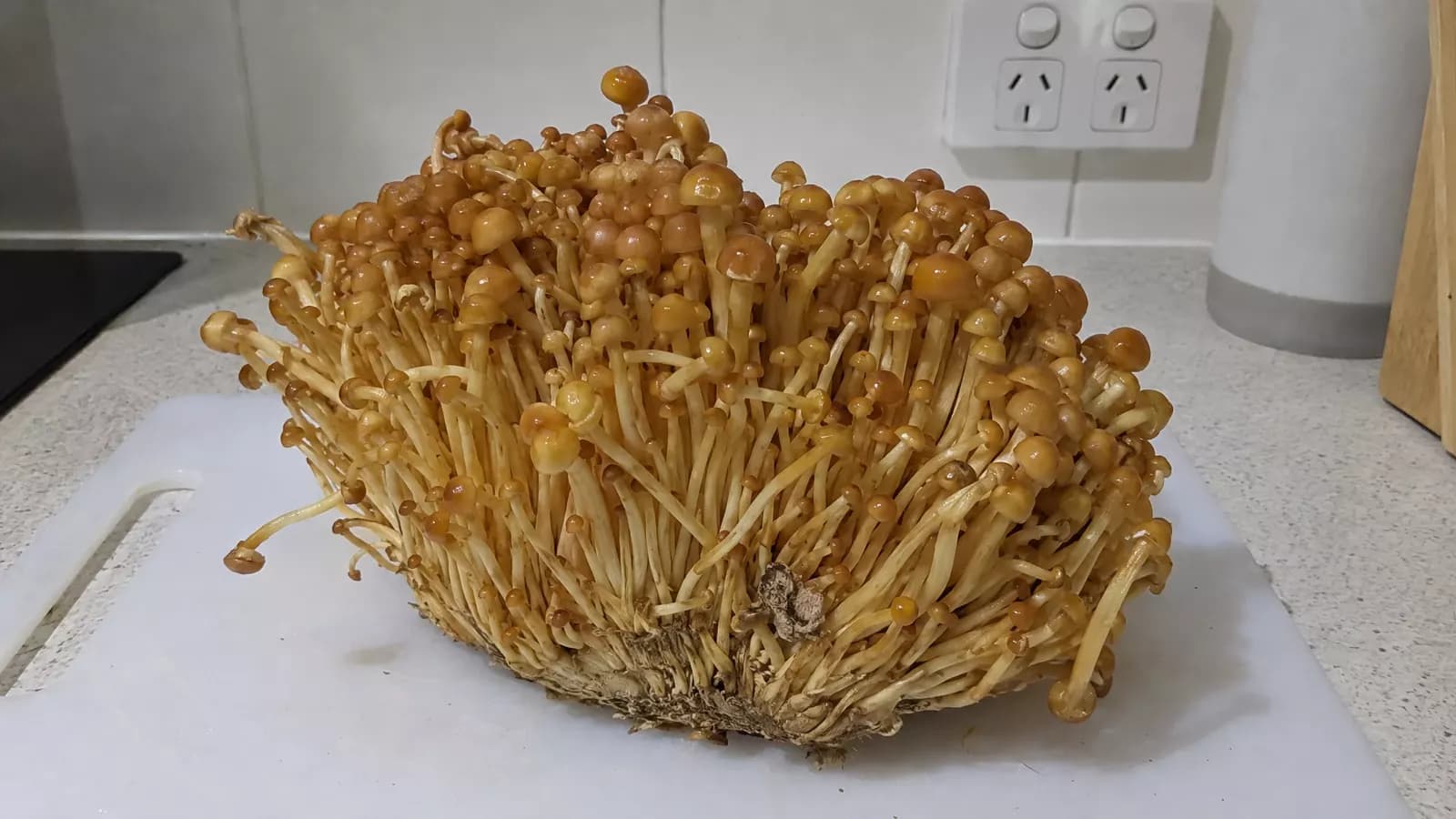
Golden enoki vs supermarket enoki
Enoki (Flammulina velutipes) is the same species whether it is golden or white. The white enoki sold in supermarket packets is grown in the dark, with plenty of carbon dioxide, which gives it long, pale stems and tiny caps. Golden enoki is closer to how the mushroom grows in the wild, with amber caps.
Either way, the texture is the point: a bouquet of slender stems that stay slightly crunchy when cooked.
What golden enoki needs
Enoki likes it cold and very humid. It wants a cool start to pin, and it tolerates more carbon dioxide than most gourmet mushrooms while it grows, which is what stretches those long stems.
| Stage | Temperature | Humidity | CO₂ |
|---|---|---|---|
| Pinning | 10–15°C | 95–100% | Not critical |
| Fruiting | 10–18°C (best 15–16°C) | 85–95% | 500–2000 ppm |
Pinning is the start: the block pushes out its first tiny mushrooms, called pins. Fruiting follows, as the pins grow into a dense bouquet of stems.
From a ready-to-fruit block, golden enoki takes about 10–14 days to reach harvest. Its Flush preset, 15°C, is the coolest of any Flush preset, tied with beech.
How to grow golden enoki in Flush
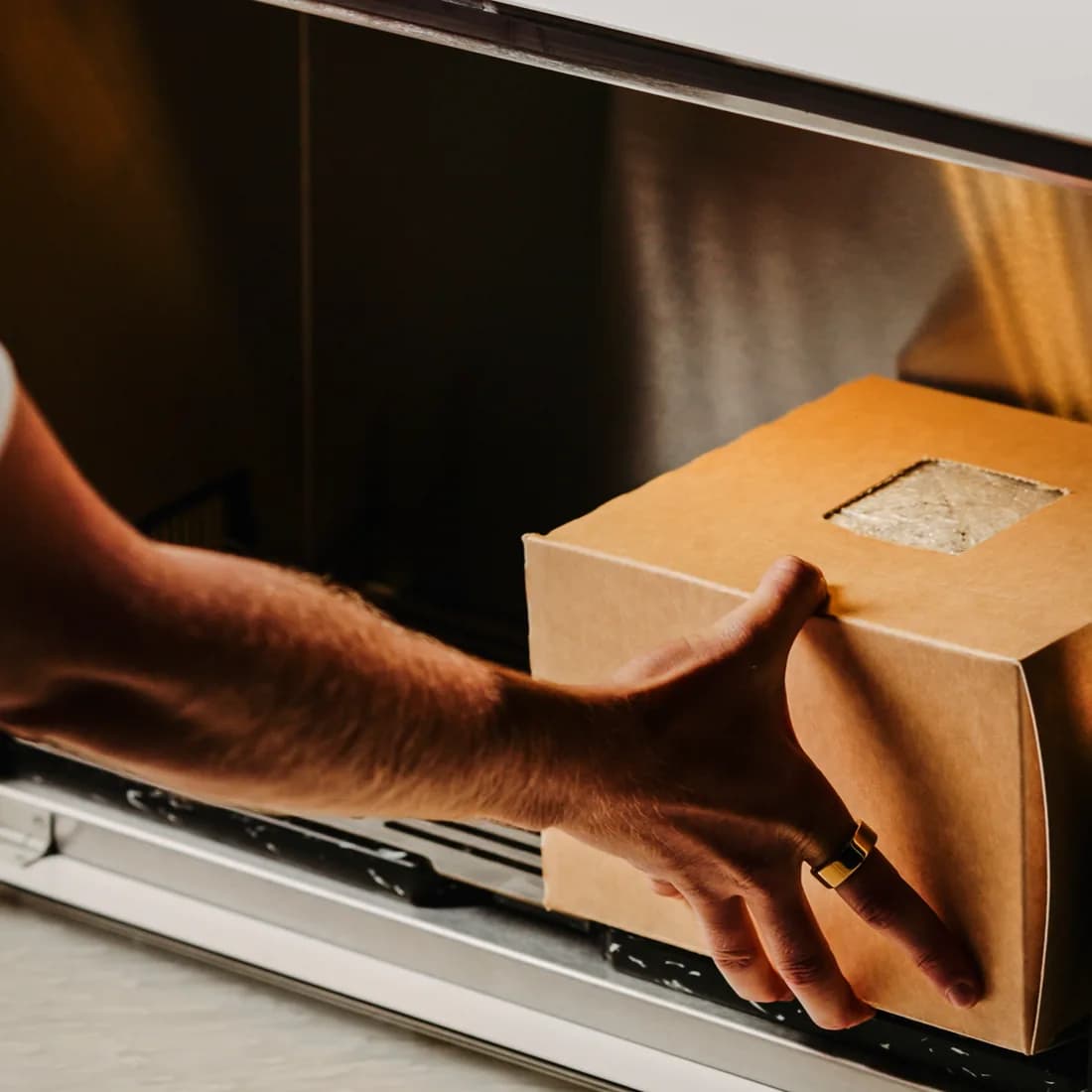
- Prepare the block. Tear open the perforated tab on top of the block's box and remove the cut-out panel. Wipe a clean knife or pair of scissors with alcohol, such as isopropyl alcohol or an alcohol wipe, and let it dry. Then cut a small X in the bag underneath, a couple of centimetres across. Sterilising the blade stops it carrying mould spores into the block.
- Load it. Place the block inside the cabinet and close the door.
- Choose the preset. In Basic mode, choose the Golden Enoki preset. Flush holds 15°C, 90% humidity and 1250 ppm CO₂ for the whole grow. Advanced mode lets you steer within the ranges above.
- Top up the water. Keep the reservoir filled with clean drinking water. A full reservoir lasts at least a week, and Flush tells you on screen when it is running low.
- Leave the door shut. Try not to open the door too often. Every opening lets in warm, dry air and lets out the carbon dioxide that helps the stems stretch.
- Harvest. Expect your first golden enoki in about 10–14 days. See below for when to pick.
New to Flush? The set-up guide walks through your first grow, and the Golden Enoki Flush Block page lists the same conditions.
How to grow golden enoki without a cabinet
You can grow golden enoki without Flush, but it is one of the harder varieties for an Australian home. Its fruiting range of 10–18°C is cooler than most living rooms for much of the year. Outside a controlled environment you are managing humidity, fresh air and temperature yourself, and results vary a lot with the room and the season.
- Grow it in winter. Choose the coolest room in the house during the coldest months. A spare room or laundry that stays cool works better than a kitchen.
- Keep it out of the sun. Direct sun warms and dries the block. Bright, indirect light is enough.
- Prepare the block. Sterilise a knife or scissors with alcohol, let it dry, and cut a small X in the top of the bag.
- Keep it humid. Mist the air around the cut several times a day, especially before pins appear. A loose, clear plastic cover with a few holes in it holds the moisture in.
- Do not over-ventilate. Enoki tolerates more carbon dioxide than most mushrooms, and a little build-up helps the stems grow long. Some growers wrap a paper collar around the top of the bag to keep the stems upright. Vent the cover once a day so it does not get stale.
In a warm house or a warm season, golden enoki is not the variety to try first. Warm-season oysters cope far better, and our guide to growing oyster mushrooms at home explains which ones. Weighing up a tent or chamber? See Mushroom grow tent vs fruiting chamber vs Flush.
When and how to harvest golden enoki
Pick golden enoki while the caps are still small and rounded and the stems are long and firm. Once the caps start to open out flat, the stems toughen and the bouquet loses its crunch.
Harvest the whole bouquet at once. Hold it at the base and cut it free with a clean knife, or twist it gently off the block. Most blocks fruit more than once. The first flush is usually the largest, with smaller ones after it, and the block is finished when it stops producing.
How to cook enoki
Always cook enoki. Food safety authorities, including Food Standards Australia New Zealand, advise cooking enoki thoroughly rather than eating it raw. That goes for home-grown and shop-bought enoki.
To prepare it, cut off the spongy base where the stems join, then pull the bouquet apart into small bundles. Home-grown enoki only needs any bits of block brushed off. Cook it until the stems are soft but still have a little crunch.
- Hot pots and noodle soups. The classic. Add bundles near the end and simmer them for a few minutes, until tender.
- Stir-fried. Toss them in a hot pan with garlic, chilli and a splash of soy sauce, or with butter and soy.
- Crispy enoki. Keep the bundles joined at the base, dust them in cornflour or a light batter, and pan-fry them until golden and crisp.
- Enoki rolls. Wrap small bundles in thinly sliced beef or bacon and pan-fry them, finishing with a sweet soy glaze.
- On the barbecue. Seal bundles in a foil parcel with butter, garlic and soy sauce, and cook them until soft.
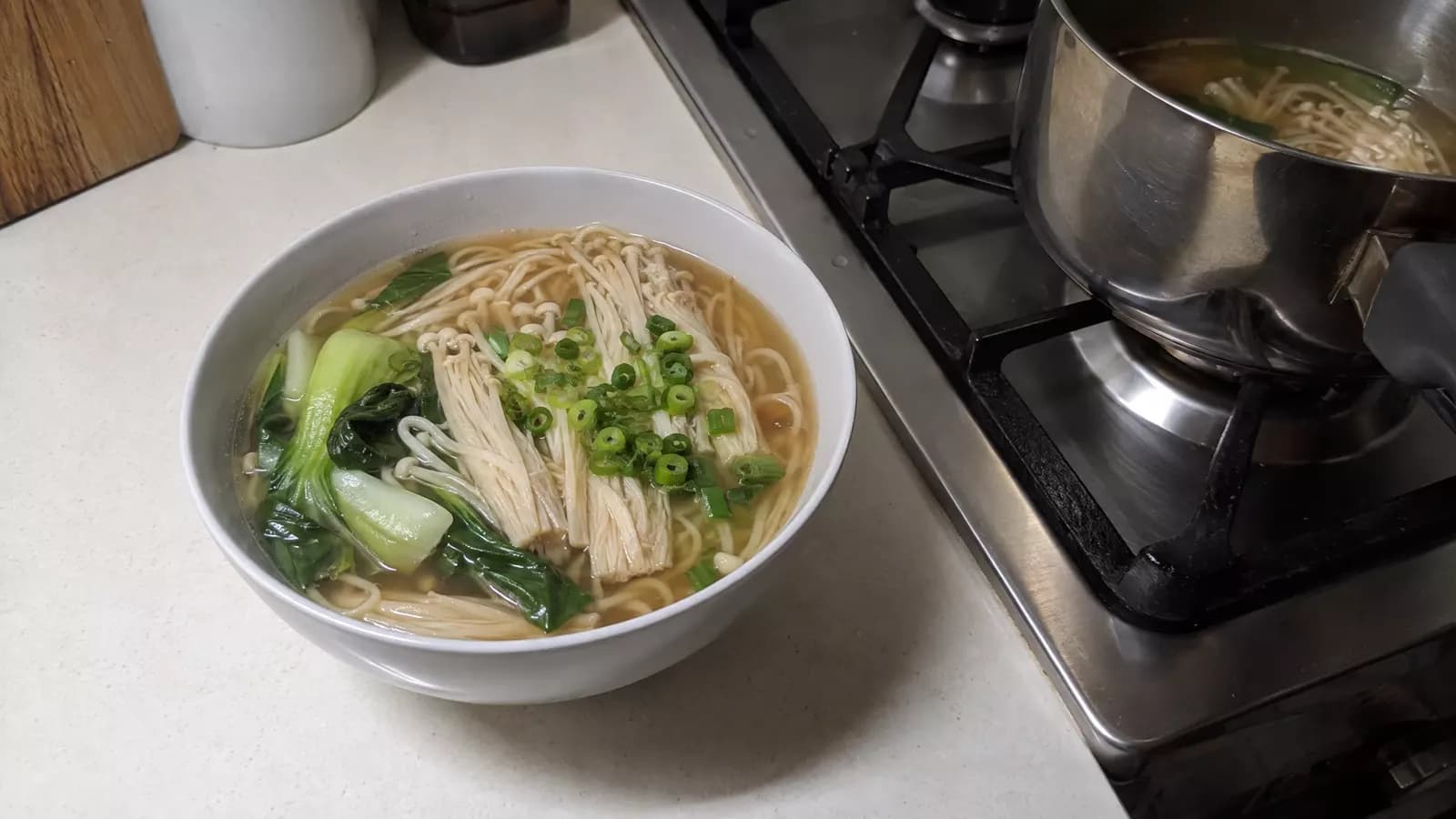
Golden enoki is best cooked soon after picking. If you need to keep it, wrap it loosely in paper towel in the fridge and use it within a few days.
Common questions
How long does enoki take to grow?
About 10–14 days from a ready-to-fruit block, based on the time printed on each Flush Block. Growing from spawn takes longer, because the mycelium has to grow through the substrate first.
What temperature does enoki need to grow?
Golden enoki pins at 10–15°C and fruits at 10–18°C, best at 15–16°C. Flush's Golden Enoki preset holds 15°C.
What is the difference between golden enoki and white enoki?
They are the same species. White supermarket enoki is grown in the dark with plenty of carbon dioxide, which gives long, pale stems. Golden enoki is closer to the wild form, with amber caps.
Can you eat enoki raw?
No. Food safety authorities, including Food Standards Australia New Zealand, advise cooking enoki thoroughly rather than eating it raw.
How do you cook enoki mushrooms?
Cut off the base, pull the bouquet into small bundles, and simmer them in a hot pot or noodle soup, stir-fry them with garlic and soy, or pan-fry them in a light batter until crisp. Cook them until soft but still a little crunchy.
Can I grow golden enoki without a Flush cabinet?
You can, but it is harder. Outside a controlled environment you are managing humidity and fresh air yourself, and results vary a lot with the room and the season.