


The short version
- A grow tent gives you the most growing space for the money, if you have room for it and are happy to set it up and tune it.
- A DIY fruiting chamber is the cheapest way to fruit a few blocks, in exchange for daily attention.
- Flush costs more upfront than either, but holds the conditions by itself, cools as well as humidifies, and sits on a kitchen bench.
What each one is
Mushroom grow tent
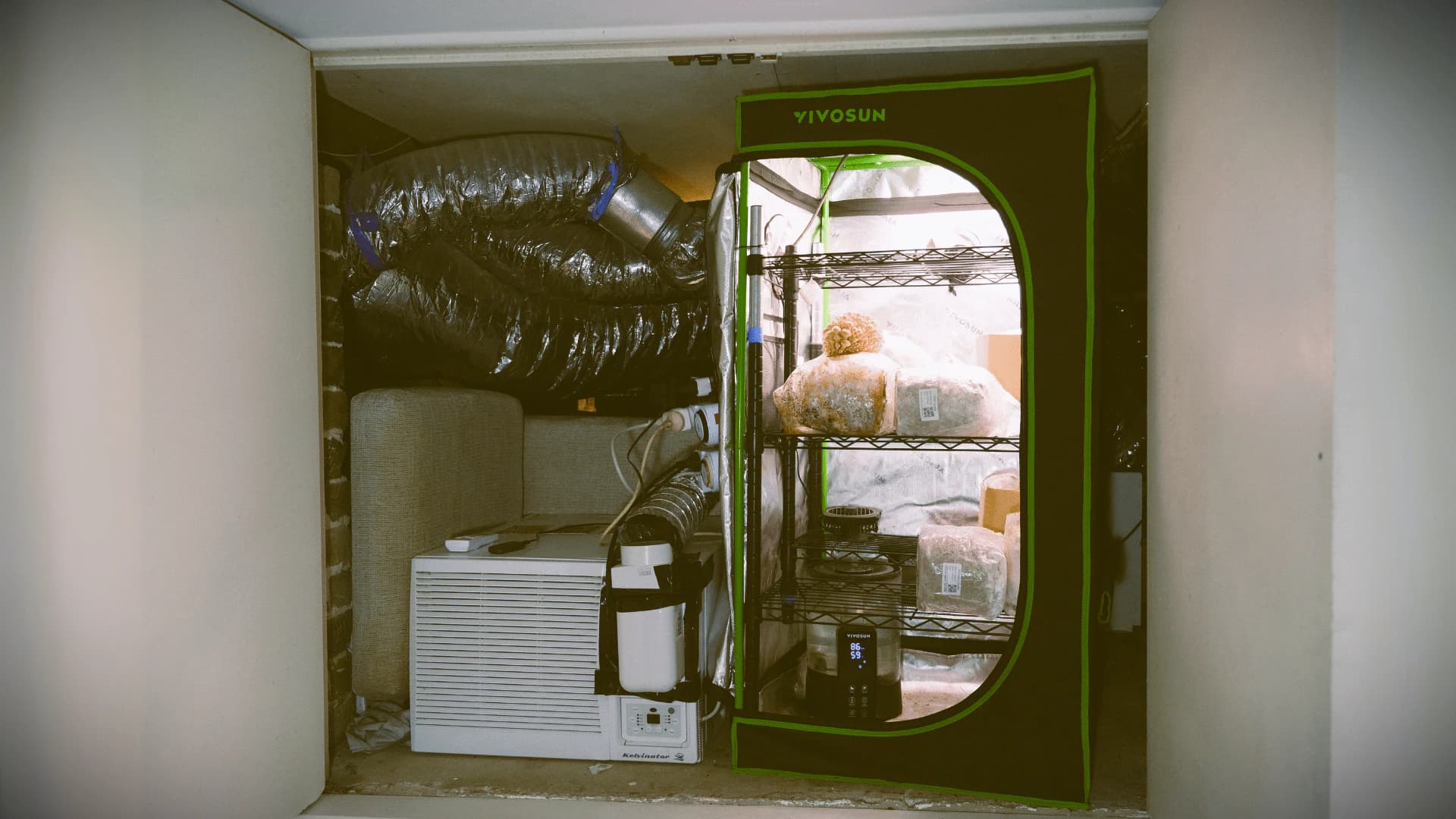
Usually a set of wire shelves inside a clear plastic cover, often called a Martha tent. On its own the tent only holds moisture in, so most growers add a humidifier, a fan to bring in fresh air and push out carbon dioxide, and often a controller or timer to run them.
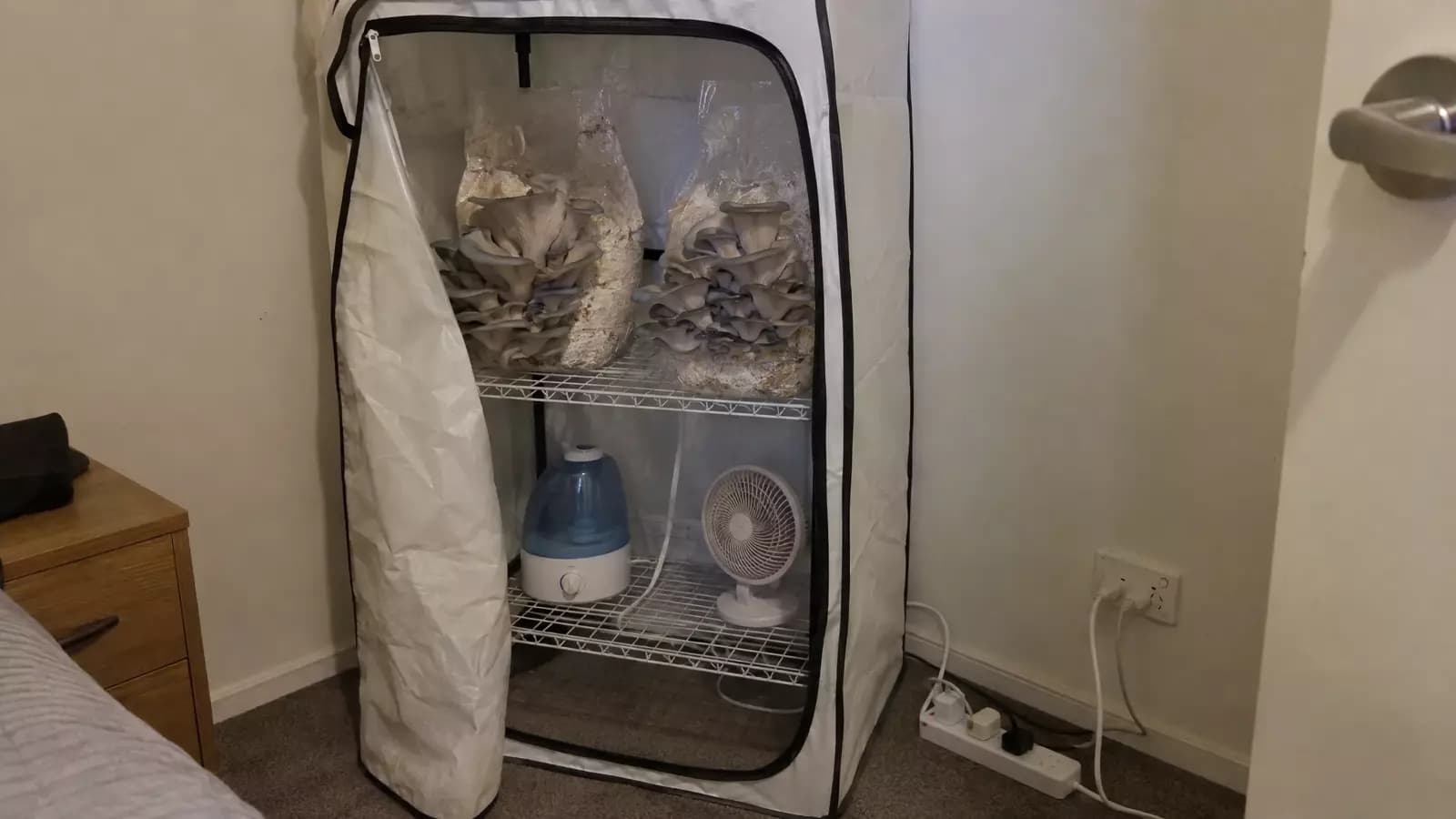
Fruiting chamber
A broad term for anything that holds humidity around a few blocks. At the simple end is a shotgun fruiting chamber: a clear plastic tub with holes drilled in it, sitting on damp perlite. At the other end is a converted cabinet or old fridge with a humidifier, a fan and a controller.
Flush
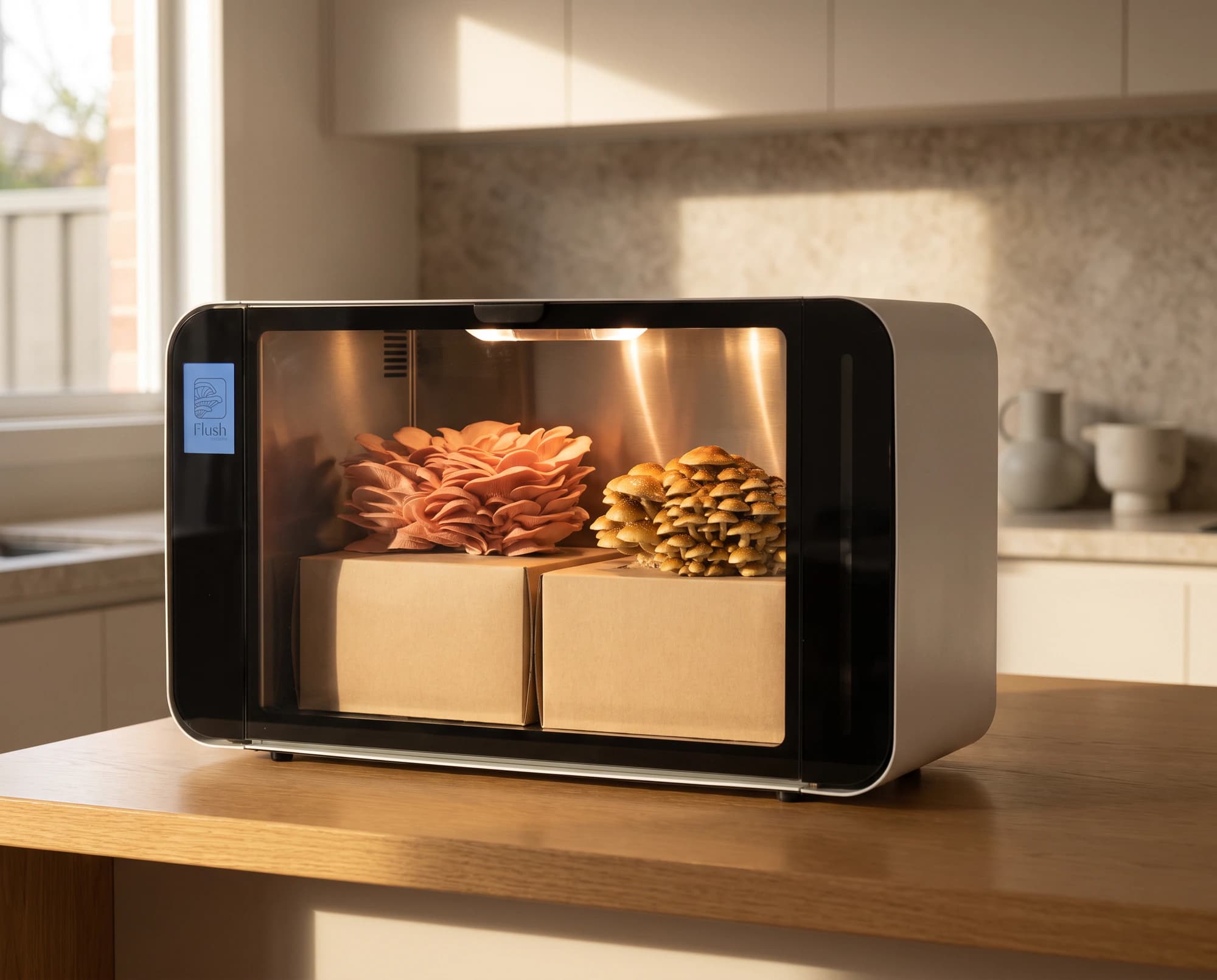
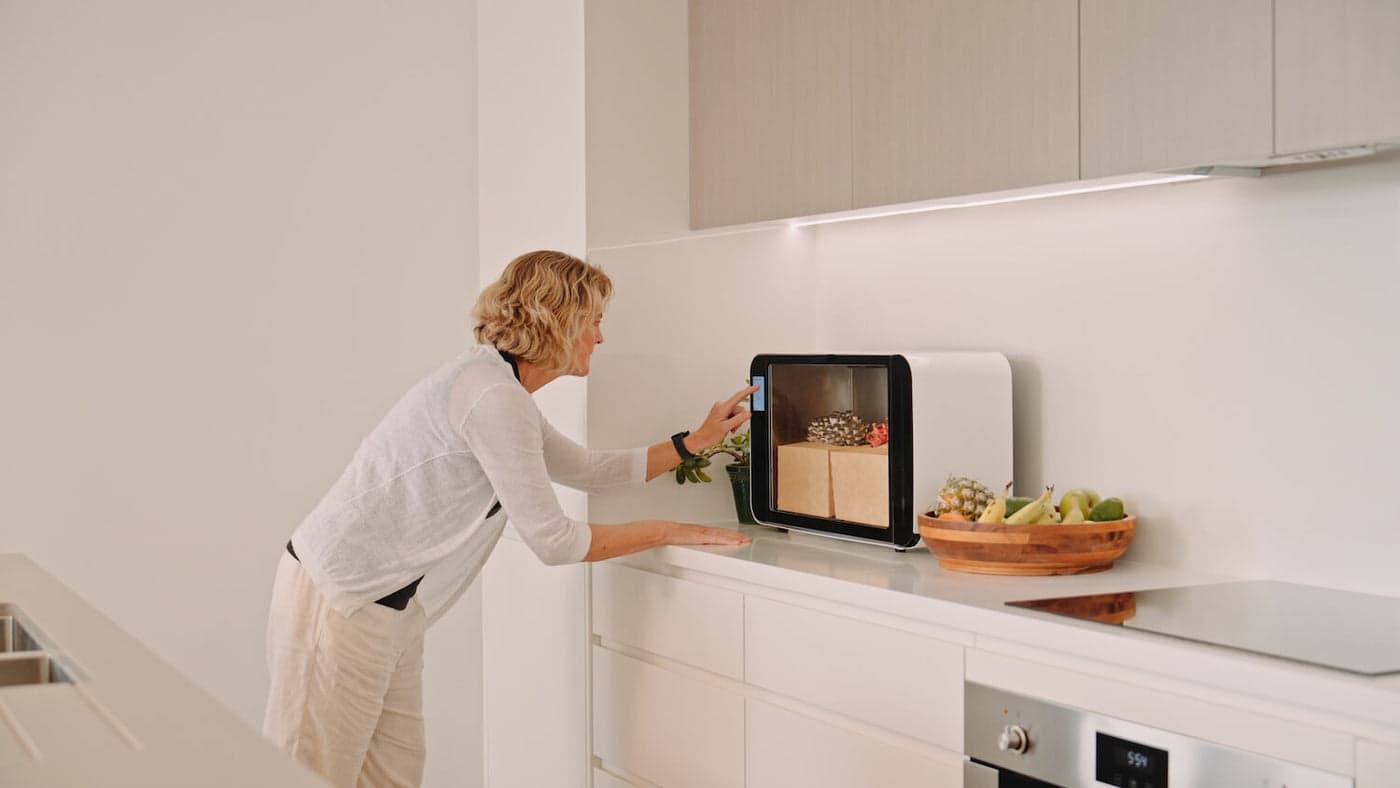
Flush is a countertop mushroom grower that automatically controls temperature, humidity and fresh air. It is a single appliance 64 cm wide, 37 cm high and 22 cm deep, with a touchscreen, presets for popular varieties, a water reservoir and room for one or two blocks. It was designed and built in Newcastle, NSW.
Side-by-side comparison
| Grow tent | DIY fruiting chamber | Flush | |
|---|---|---|---|
| Upfront cost | Tent and shelving, plus a humidifier, a fan and usually a controller | Low for a tub, more for a converted cabinet with a controller | One appliance. See the current price |
| Setup | Choose, buy and connect the parts, then tune them | A DIY project, from an afternoon to a few weekends | Plug in, fill the reservoir and load a block, in about five minutes |
| Day to day | Refill the humidifier, check conditions, adjust | Mist and fan by hand, often daily, unless you add a controller | Top up the reservoir. A full one lasts at least a week |
| Temperature | Usually not controlled. Needs a cool room or air conditioning in summer | Usually not controlled | Heats and cools to hold the preset |
| Humidity and fresh air | Humidifier and fan, tuned by you | By hand, or a humidifier and fan on a controller | Held automatically, with fresh air exchanged continuously |
| Capacity | Many blocks across several shelves | A few blocks | One or two blocks, up to around 1 kg of mushrooms a week with two |
| Space | Floor-standing, usually in a garage or spare room | A tub on a shelf, or a cabinet-sized unit | 64 × 37 × 22 cm on a benchtop |
| Cleaning | Several parts and surfaces to keep clean | Tubs wash easily. Converted cabinets take more work | Easy to wipe clean |
| Power | Humidifier, fan, and any heater or air conditioner | Little or none for a tub | Maximum about 120 W, usually much less |
| Monitoring | Separate sensors or controller | By eye | Touchscreen, plus your phone or computer over Wi-Fi |
Cost: upfront and ongoing
We have not put prices on tents and chambers, because parts and setups vary too much for one number to be useful. What is worth comparing is the cost of a setup that actually works. A tent alone does not hold humidity, so add a humidifier, a fan and ideally a controller, and in an Australian summer, some way of keeping the room cool.
Flush's price is on the Flush Cabinet page. Ongoing costs are similar for all three: a block or spawn for each grow, water and power. Flush draws about 120 W at most and usually much less. It works hardest in summer, when it is cooling. Flush Blocks work in any of the three setups.
Effort and routine
This is where the three differ most. A tub chamber needs you every day: misting, fanning and checking for dryness. A tent with a humidifier and controller needs less daily attention once it is tuned, but getting it there takes trial and error, and you will be refilling the humidifier and adjusting things as the seasons change.
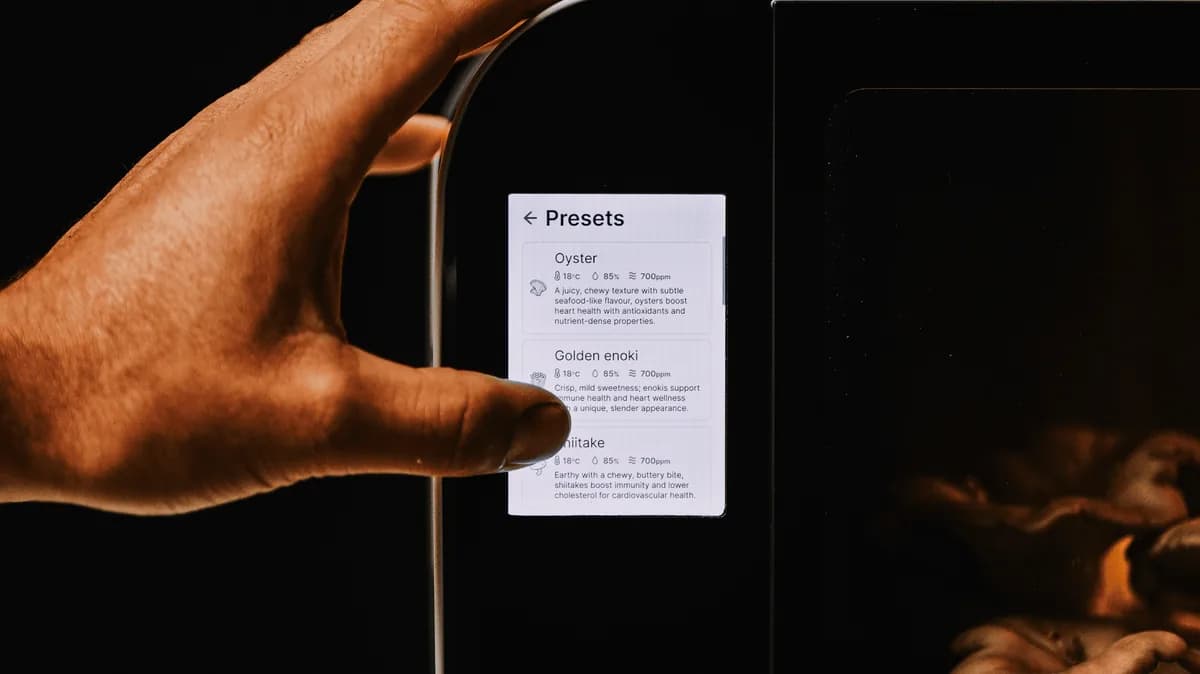
Flush is built to remove that routine. You choose a preset in Basic mode, or set your own temperature, humidity and CO₂ targets in Advanced mode, and it holds them. The regular job is topping up the reservoir, and the cabinet tells you on screen when it is running low.
Space and looks
Tents are floor-standing and usually end up in the garage or a spare room. A tub chamber fits on a shelf but is not something most people want in the kitchen. Flush was designed to stay out on the bench, with a calm black frame, a full-view glass door and a soft light on a day and night cycle, so you can watch the mushrooms grow.
Summer is the real test
In most of Australia, summer is when home setups struggle. Humidifiers and fans do not cool, and many gourmet varieties fruit best well below a hot day's room temperature. Before Flush, our own grow tent needed ducted air conditioning to get through summer, which is a big part of why we built a cabinet that cools.
If you are sticking with a tent or chamber, grow warm-tolerant varieties such as pink or golden oyster over summer. Our guide to growing mushrooms at home in Australia lists which varieties cope with a warmer room.
Which should you choose?
- Choose a grow tent if you want to grow a lot of mushrooms, have a cool spare room or garage, and enjoy building and tuning a setup.
- Choose a DIY fruiting chamber if you want to try fruiting a few blocks for very little money and can check on them every day.
- Choose Flush if you want fresh mushrooms every week without a daily routine, live in an apartment or a hot climate, or want something that looks good enough to leave on the bench. See the Flush Cabinet.
Common questions
Is an automated mushroom grower worth it?
It depends on what you value. If you enjoy building and tuning a setup, a tent is good value. If your blocks keep drying out or overheating, or you want mushrooms every week without a routine, an automated grower takes that work off your hands. Flush comes with a 30-day money-back guarantee, so you can try it at home.
What is a Martha tent?
A Martha tent is a set of wire shelves inside a clear plastic cover, used as a mushroom grow tent. It holds humidity in, and most growers add a humidifier and a fan to keep the air moist and fresh.
Does Flush work in an Australian summer?
Yes. Flush cools as well as humidifies, so it holds each variety's preset through hot weather. Summer is when it works hardest, and it uses far less power in milder weather.
How many blocks fit in Flush?
One or two at a time. With two blocks on the go, Flush can grow up to around 1 kg of mushrooms a week, depending on the variety.
Can I use Flush Blocks in a grow tent or fruiting chamber?
Yes. Flush Blocks are ready-to-fruit blocks and will fruit in a tent or chamber. Outside a controlled environment you are managing humidity and fresh air yourself, and results vary more with the room and the season. See our mushroom grow kits.