

What lion's mane needs
Lion's mane (Hericium erinaceus) likes it mild and very humid, with steady fresh air. These are the growing ranges for our lion's mane blocks.
| Stage | Temperature | Humidity | CO₂ |
|---|---|---|---|
| Pinning | 15–18°C | 90–100% | Not critical |
| Fruiting | 16–24°C (best 18–21°C) | 90–95% | 500–1000 ppm |
Pinning is the start: the block pushes out its first tiny mushrooms, called pins, once it gets fresh air and high humidity. Fruiting follows, as those pins swell into a full mushroom over the next several days.
From a ready-to-fruit block, lion's mane takes about 14–21 days to reach harvest. That is a little slower than oyster mushrooms, which are often ready in about a week.
Is lion's mane easy to grow?
Yes, from a ready-to-fruit block. Lion's mane is rated a beginner variety. The block arrives already colonised, so there is no substrate to prepare. Your job is to give it the humidity and fresh air in the table above, and to keep the temperature in range.
Humidity is where most home grows go wrong. Lion's mane wants 90% or more, and the air in most homes is far drier, especially with heating or air conditioning on. A block that dries out stops growing well, which is why growing without a cabinet takes regular attention.
How to grow lion's mane in Flush
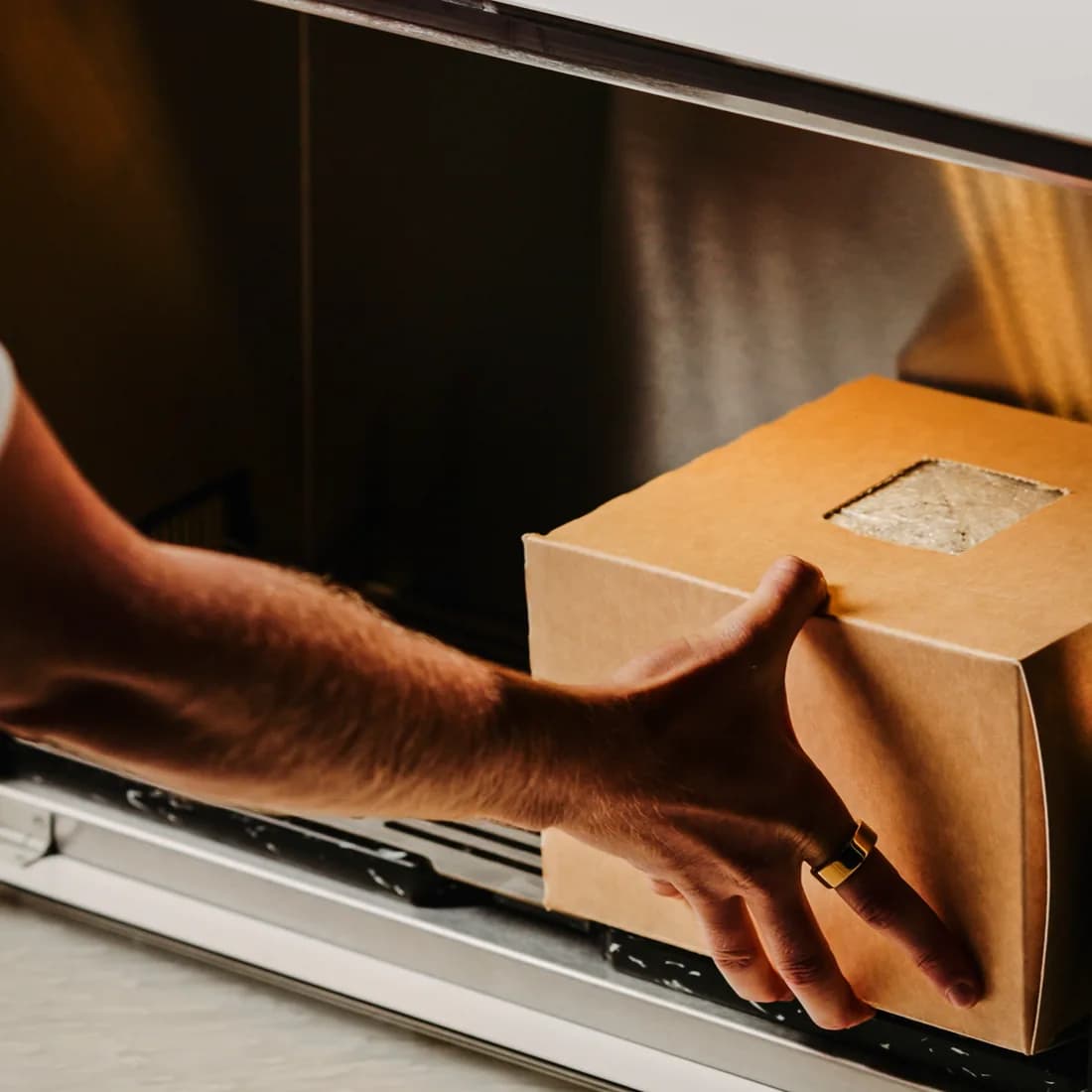
- Prepare the block. Tear open the perforated tab on top of the block's box and remove the cut-out panel. Cut a small X in the bag underneath, a couple of centimetres across, with a clean knife or scissors wiped with alcohol to avoid contamination. This is where your lion's mane will grow.
- Load it. Place the block inside the cabinet and close the door.
- Choose the preset. In Basic mode, choose the Lion's Mane preset. Flush holds 19°C, 88% humidity and 750 ppm CO₂ for the whole grow. If you prefer, Advanced mode lets you steer within the ranges above as the block moves from pinning to fruiting.
- Top up the water. Keep the reservoir filled with clean drinking water. A full reservoir lasts at least a week, and Flush tells you on screen when it is running low.
- Leave the door shut. Pins can appear within days. Try not to open the door too often, because the cabinet is holding the climate behind it.
- Harvest. Expect your first lion's mane in about 14–21 days. See below for when to pick.
New to Flush? The set-up guide walks through your first grow, and the Lion's Mane Flush Block page lists the same conditions.
How to grow lion's mane without a cabinet
You can grow a ready-to-fruit lion's mane block without Flush. It is harder, because outside a controlled environment you are managing humidity and fresh air yourself, and results vary a lot with the room and the season.
- Pick a spot. Somewhere bright but out of direct sun, away from heaters and air-conditioning vents, that stays within lion's mane's fruiting range of 16–24°C.
- Prepare the block. Cut a small X in the bag where you want it to fruit, with a clean knife or scissors wiped with alcohol to avoid contamination.
- Keep it humid. Mist the air around the cut several times a day so it never dries out. A loose, clear plastic cover with a few holes in it helps hold the moisture in while letting air through. Mist around the mushroom rather than soaking it.
- Give it fresh air. Lift or vent the cover at least once a day. Without fresh air, carbon dioxide builds up and growth suffers.
- Watch the temperature. In summer, a warm room can push it out of range. Grow it in the coolest part of the house, or wait for milder weather.
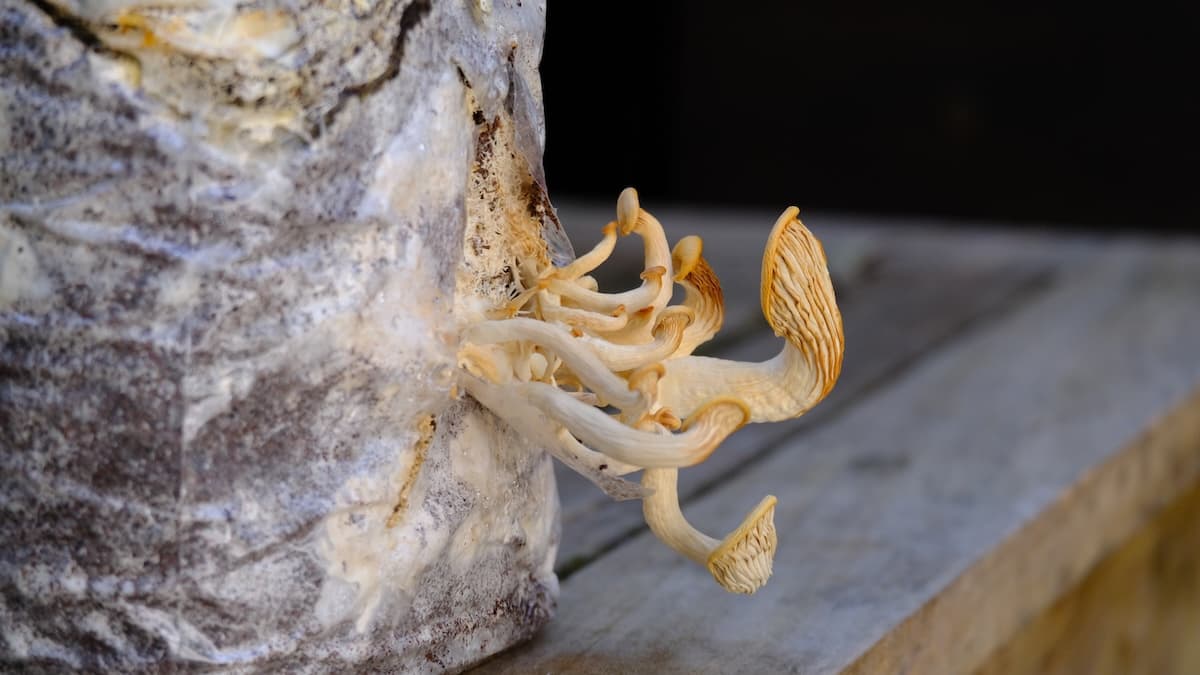
Weighing up a tent or chamber instead? See Mushroom grow tent vs fruiting chamber vs Flush.
When and how to harvest lion's mane
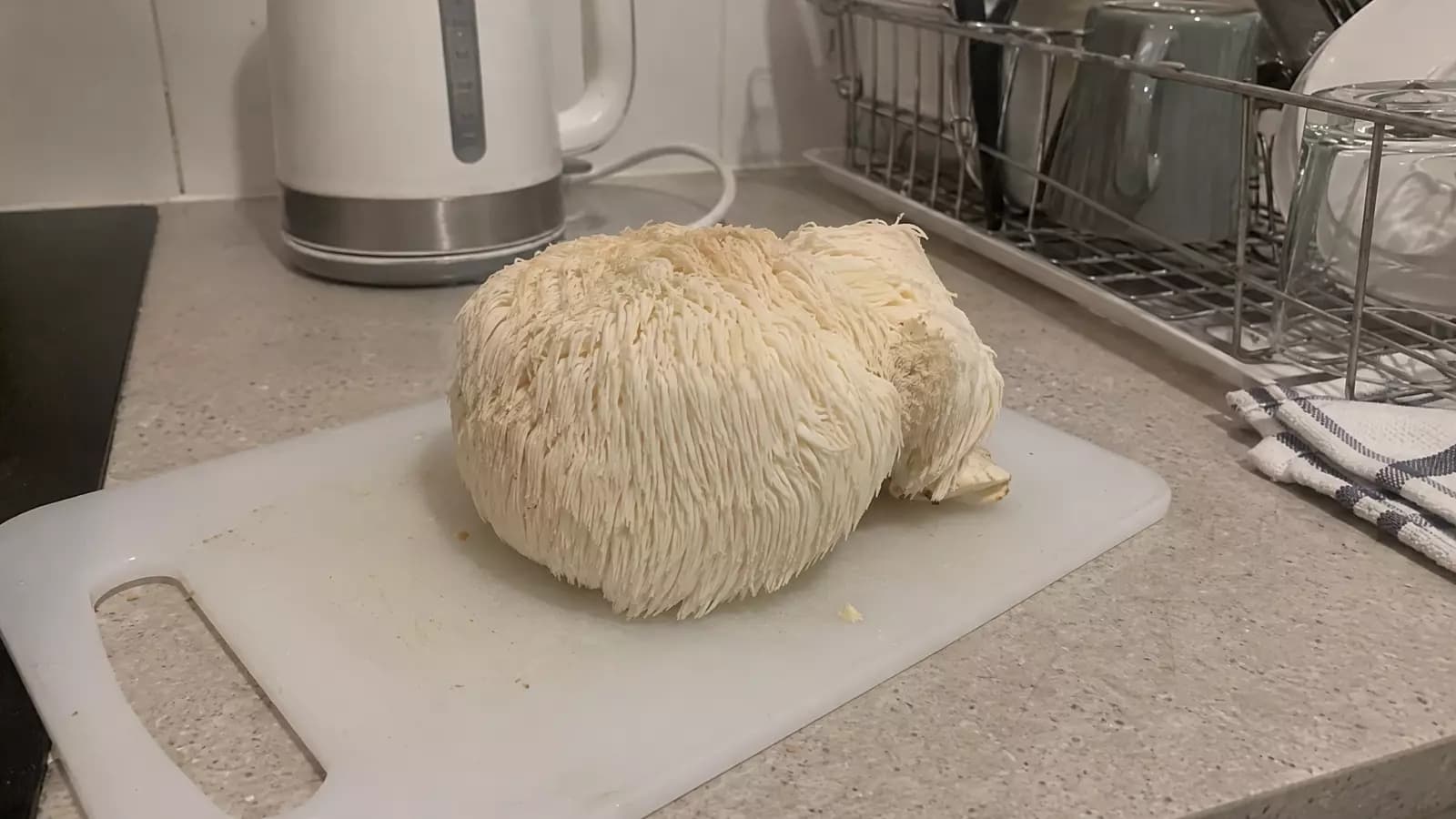
Lion's mane has no cap, so the usual advice for oyster mushrooms does not apply. Pick it when it has grown into a full, shaggy ball and its spines have formed, while it is still white and firm. If it starts to turn yellow or brown, it is past its best, so pick it straight away.
To harvest, hold it gently and twist it off the block, or cut it at the base with a clean knife. Most blocks fruit more than once. The first flush is usually the largest, with smaller ones after it, and the block is finished when it stops producing.
Cooking lion's mane
Lion's mane is at its best pan-seared. Tear or slice it into thick, flat pieces and cook them in butter or oil in a hot pan until golden on both sides. That gives the meatiest texture and the best flavour.
It also works in tacos, pasta and sandwiches. Cook it soon after picking for the best texture.
A note on health claims. You will find plenty of them online about lion's mane. This guide is about growing and cooking it as food, and we do not make health claims about it.
A close relative: coral tooth
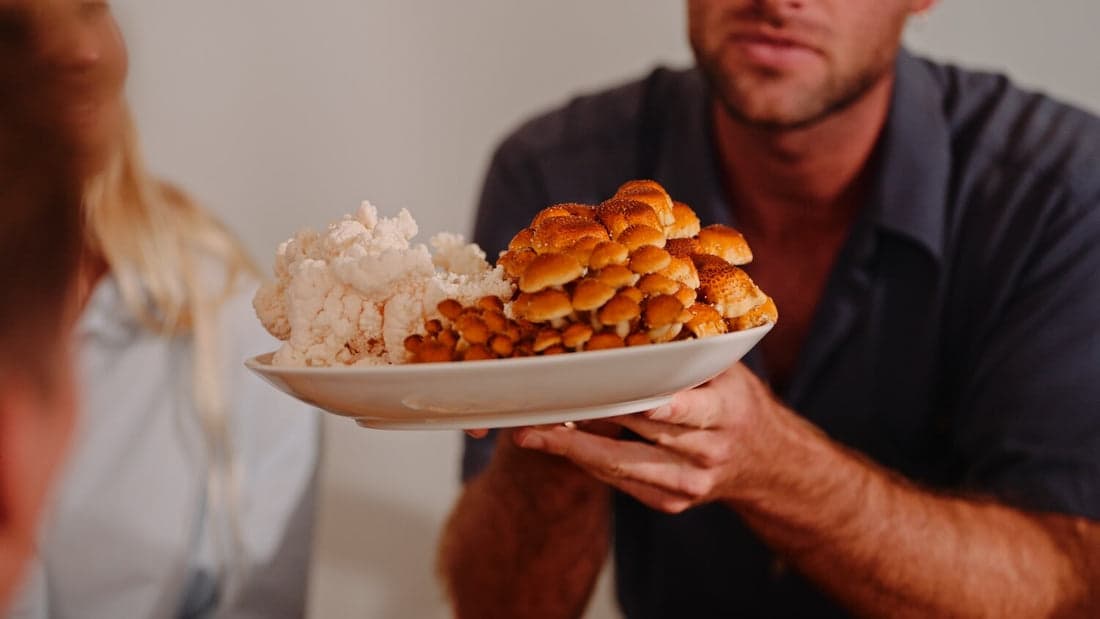
Coral tooth (Hericium coralloides) is lion's mane's branching cousin. It has the same published growing ranges, so everything in this guide applies, and it has a tender texture and mild, delicate flavour of its own.
Common questions
How long does lion's mane take to grow?
About 14–21 days from a ready-to-fruit block. Growing from spawn takes longer, because the mycelium has to grow through the substrate first.
Is lion's mane easy to grow at home?
From a ready-to-fruit block, yes. It is rated a beginner variety. The hard part without a cabinet is keeping the humidity at 90% or more.
What temperature does lion's mane need to grow?
It fruits at 16–24°C, with 18–21°C as the best range. Flush's Lion's Mane preset holds 19°C.
Can I grow lion's mane without a Flush cabinet?
You can, but it is harder. Outside a controlled environment you are managing humidity and fresh air yourself, and results vary a lot with the room and the season.
How do I know when lion's mane is ready to pick?
When it is a full, shaggy ball with formed spines and still white and firm. If it starts to yellow or brown, pick it straight away.