

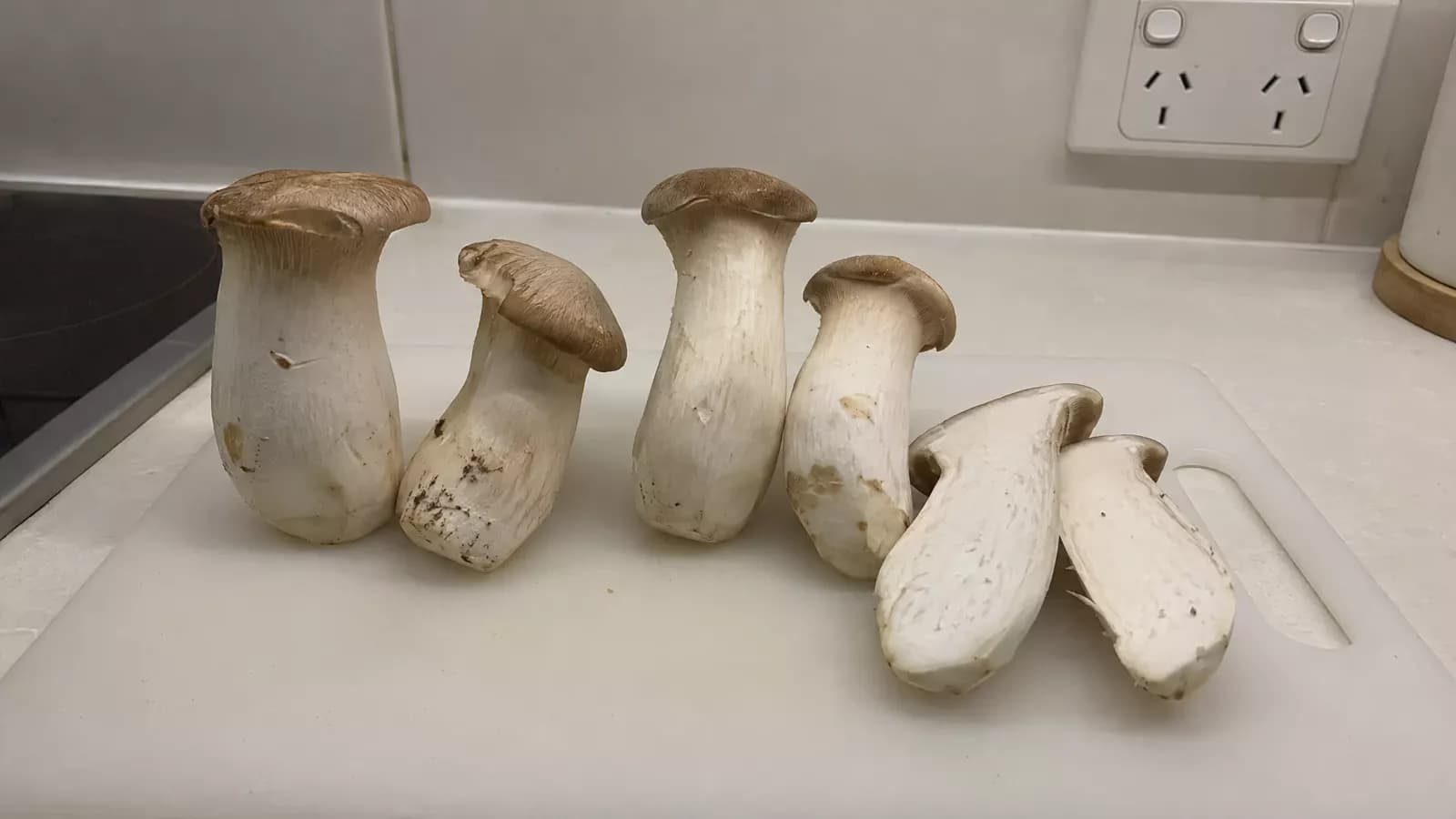
King oyster and black pearl
King oyster (Pleurotus eryngii) grows as a few thick, white stems with small tan caps. It has a firm, meaty texture and a mild umami flavour, and you can slice it into medallions, shred it or grill it whole. See the King Oyster Flush Block.
Black pearl (Pleurotus ostreatus × eryngii) is a cross between the common oyster and king oyster. It has broader, darker caps, sturdy stems and a rich savoury bite, a chef's favourite for its deep umami. It holds its shape well for grilling, roasting and pan-searing. See the Black Pearl King Oyster Flush Block.
What king oyster needs
Both like it cool, with very high humidity to start. King oyster also tolerates more carbon dioxide than other oysters while it grows.
| Variety and stage | Temperature | Humidity | CO₂ |
|---|---|---|---|
| King oyster, pinning | 10–15°C | 95–100% | Not critical |
| King oyster, fruiting | 15–21°C (best 15–17°C) | 85–90% | 500–2000 ppm |
| Black pearl, pinning | 15–18°C | 90–95% | Not critical |
| Black pearl, fruiting | 15–21°C (best 15–18°C) | 85–90% | 500–800 ppm |
Pinning is the start: the block pushes out its first tiny mushrooms, called pins. Fruiting follows, as those pins grow into full mushrooms.
Notice the CO₂. Higher CO₂ encourages longer stems, and with king oyster the stem is the part you want. That is why Flush's King Oyster preset holds 1250 ppm, against 650 ppm for the Snow White Oyster preset.
From a ready-to-fruit block, expect to harvest in about 10–14 days. That is slower than most other oysters, which are often ready in about a week. See How to grow oyster mushrooms at home for those.
How to grow king oyster in Flush
- Prepare the block. Tear open the perforated tab on top of the block's box and remove the cut-out panel. Wipe a clean knife or pair of scissors with alcohol, such as isopropyl alcohol or an alcohol wipe, and let it dry. Then cut a small X in the bag underneath, a couple of centimetres across. Sterilising the blade stops it carrying mould spores into the block.
- Load it. Place the block inside the cabinet and close the door.
- Choose the preset. In Basic mode, open the King Oyster preset group and choose King Oyster or Black Pearl King Oyster. Both hold 16°C, 93% humidity and 1250 ppm CO₂. Advanced mode lets you steer within the ranges above as the block moves from pinning to fruiting.
- Top up the water. Keep the reservoir filled with clean drinking water. A full reservoir lasts at least a week, and Flush tells you on screen when it is running low.
- Leave the door shut. Try not to open the door too often while the pins form, because the cabinet is holding the high humidity they need.
- Harvest. Expect your first king oysters in about 10–14 days.
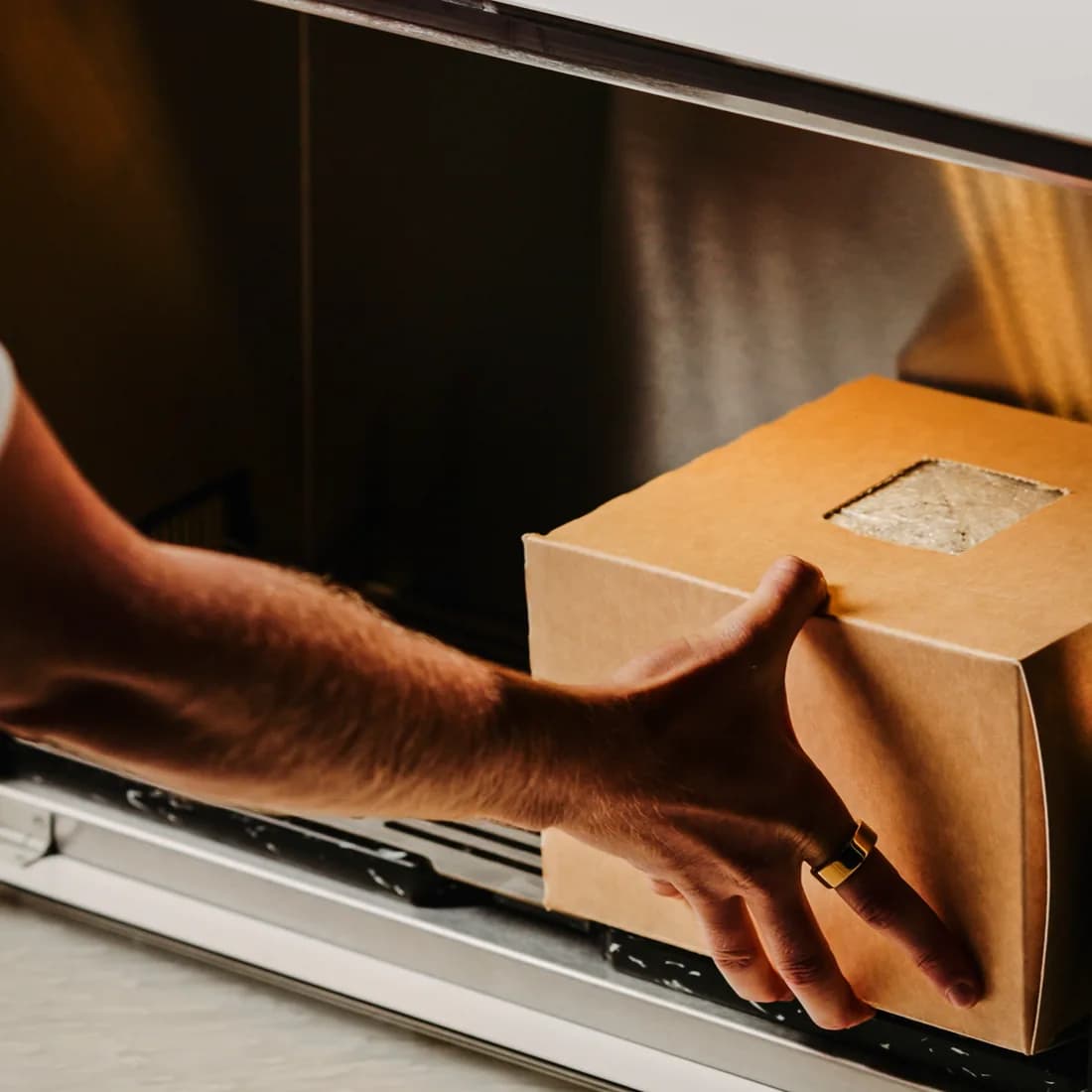
King oyster and black pearl share a preset, so one of each grows happily side by side in the same cabinet.
New to Flush? The set-up guide walks through your first grow.
How to grow king oyster without a cabinet
You can grow a king oyster block without Flush, but it is one of the less forgiving oysters. It wants very high humidity to pin, 95–100%, and it likes it cool. Outside a controlled environment you are managing humidity and fresh air yourself, and results vary a lot with the room and the season.
- Pick a cool spot. Somewhere out of direct sun, away from heaters and air-conditioning vents, that stays within its fruiting range of 15–21°C. In most Australian homes that means the cooler months.
- Prepare the block. Sterilise a knife or scissors with alcohol, let it dry, and cut a small X in the top of the bag.
- Keep it very humid. Mist the air around the cut several times a day, especially before pins appear. A loose, clear plastic cover with a few holes in it helps hold the moisture in.
- Go easy on the fresh air at first. Vent the cover once or twice a day. King oyster tolerates more carbon dioxide than other oysters, which helps the stems thicken, but it still needs some air exchange.
- Watch for dry caps. If the cap edges crack or the young mushrooms look shrivelled, the air is too dry. Mist more often.
Weighing up a tent or chamber instead? See Mushroom grow tent vs fruiting chamber vs Flush.
When and how to harvest king oyster
Pick king oyster when the stems are thick and firm and the caps are still slightly domed, with their edges curling down. Once a cap flattens out and its edges start to turn up, the mushroom is past its best.
Cut each mushroom at the base with a clean knife, or twist the whole group off the block. Most blocks fruit more than once. The first flush is usually the largest, with smaller ones after it, and the block is finished when it stops producing.
How to cook king oyster mushrooms
King oyster stays firm when cooked, so it suits high heat. Do not throw the stem away: it is the best part. Here are four ways to cook it.
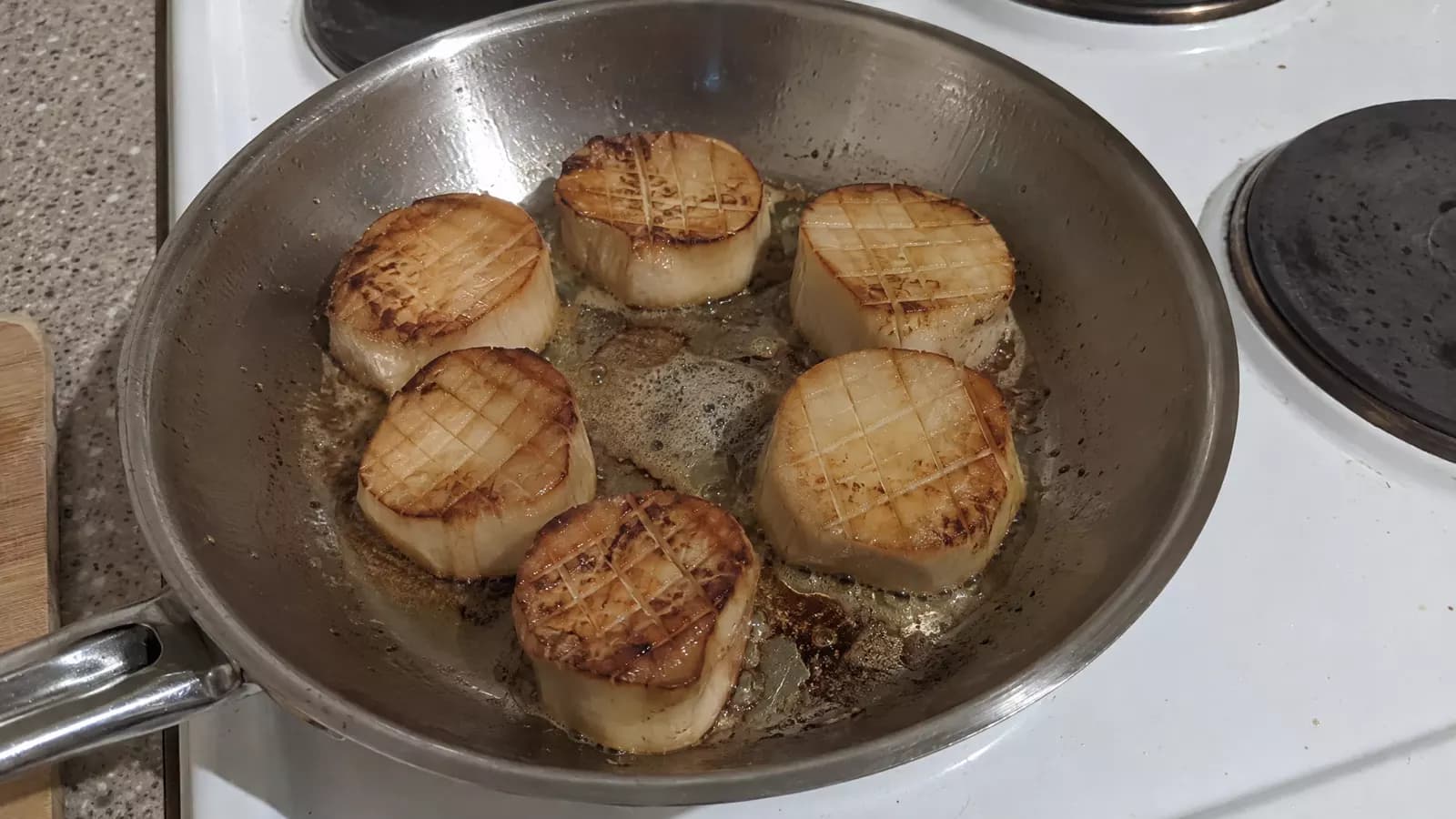
King oyster "scallops"
- Cut the stems into thick rounds, about 2 cm.
- Score both cut faces in a shallow criss-cross pattern so they brown and soak up flavour.
- Sear them in a hot pan with a little oil, without moving them, until deep golden underneath, then turn them and brown the other side.
- Add a knob of butter and a crushed garlic clove for the last minute and spoon it over. Finish with salt and a squeeze of lemon, or a splash of soy sauce.
Pulled king oyster
Shred the stems lengthwise with two forks, then fry the strands in a hot pan until the edges crisp. Season with smoked paprika, garlic and a little soy sauce, and pile them into tacos, burgers or rolls.
Grilled whole or halved
Halve the mushrooms lengthwise, brush them with oil and soy sauce, and cook them on a barbecue or grill pan until tender and charred in stripes.
Roasted black pearl
Black pearl's broad caps roast beautifully. Toss whole or halved mushrooms in oil, salt and pepper and roast them in a hot oven until golden, then serve them as a side or over polenta.
Cook king oyster soon after picking for the best texture. If you need to keep it, store it in a paper bag in the fridge and use it within a few days.
Common questions
How long do king oyster mushrooms take to grow?
About 10–14 days from a ready-to-fruit block, based on the time printed on each Flush Block. Black pearl takes about the same. Growing from spawn takes longer, because the mycelium has to grow through the substrate first.
Is king oyster hard to grow at home?
Without a cabinet it is harder than other oysters, because it needs very high humidity to pin and a cool room. In Flush, the King Oyster preset holds those conditions for you.
What is a black pearl king oyster?
A cross between the common oyster mushroom and king oyster (Pleurotus ostreatus × eryngii). It has broader, darker caps than king oyster, sturdy stems and a rich savoury flavour.
Can you eat king oyster mushroom stems?
Yes. The thick stem is the best part of a king oyster. Slice it into rounds and sear it, shred it, or grill it whole.
How do you cook king oyster mushrooms?
Cut the stems into thick rounds, score them, and sear them in a hot pan until deep golden on both sides, then finish with butter and garlic. They also shred well for tacos and grill well whole.
Can I grow king oyster without a Flush cabinet?
You can, but it is harder. Outside a controlled environment you are managing humidity and fresh air yourself, and results vary a lot with the room and the season.